Research
Scott Small – the researcher who believes we've been tackling Alzheimer's from the wrong angle
Article no. 40 · August 4, 2026 · Updated September 20, 2026 ·

For the past thirty years, Alzheimer's research has largely revolved around a single question: how do we remove amyloid from the brain? This work has led to the first disease-modifying drugs. It's an important breakthrough. But the effect is still limited, and therefore researchers are looking for even earlier explanations for why the disease arises. One of the most interesting researchers in this field is Professor Scott Small at Columbia University in New York.
A new view on the disease
Scott Small argues that amyloid might not be the disease's true starting point. The problem could begin much earlier – inside the nerve cells themselves.
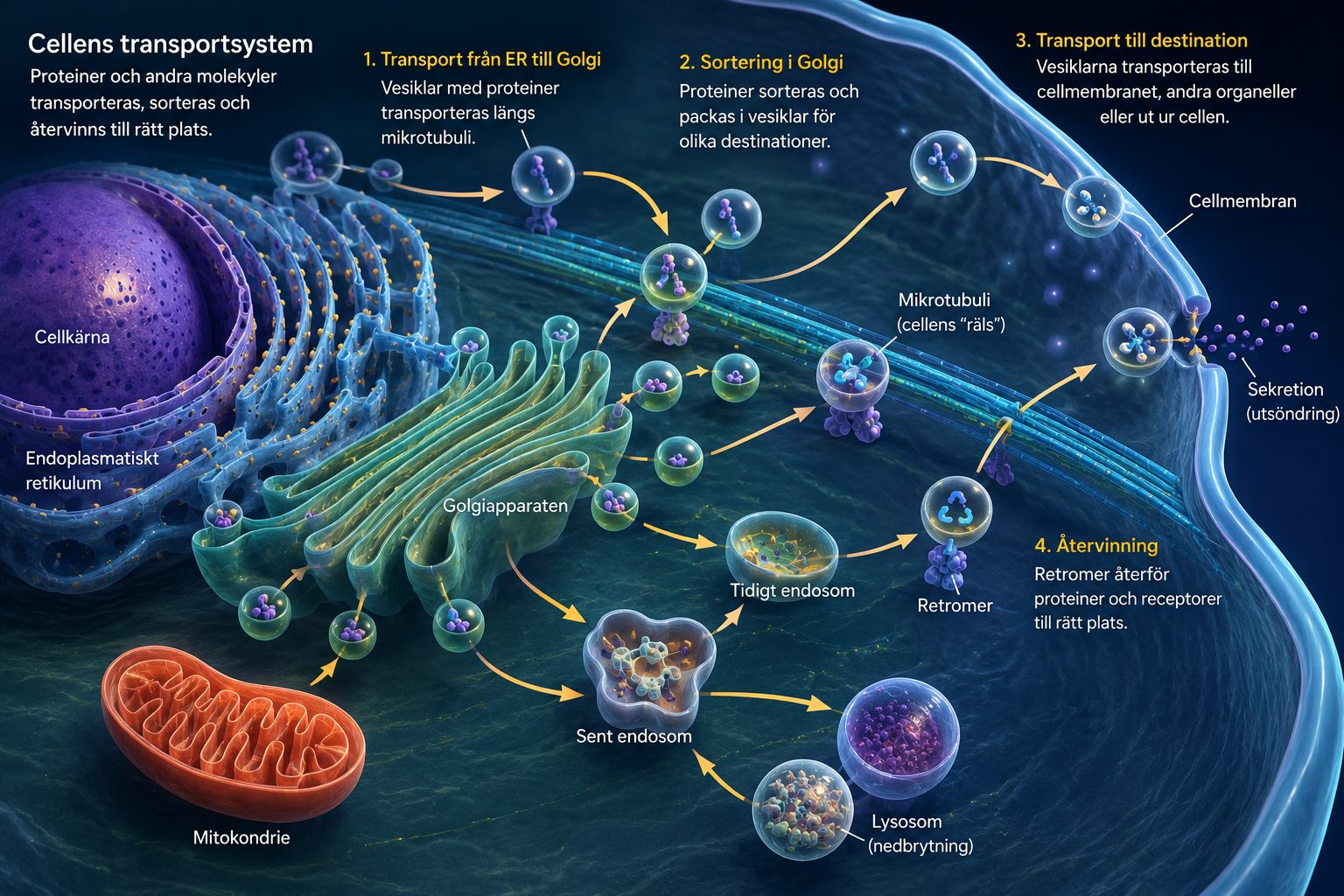
He describes the nerve cell as an advanced transport system. Every second, proteins and other molecules are transported between different parts of the cell. If this transport starts to function poorly, a traffic jam occurs. The cell's recycling no longer works as it should, and only then does amyloid accumulation increase. Later, tau changes also appear.
If this theory is correct, Alzheimer's has partly been approached from the wrong angle. We have tried to remove the consequences of the disease, while the real cause may lie earlier in the process.
This does not mean that today's amyloid drugs are wrong. They can be an important part of the treatment. But they will likely need to be supplemented with drugs that protect the nerve cells' own transport system.
The hunt for the next generation of drugs
Scott Small and his research group are therefore working on developing drugs that stabilize a system in the nerve cell called retromer. Retromer functions much like the cell's internal logistics center.
If retromer functions better, the nerve cell can transport and recycle its proteins correctly. The idea is that the disease process can then be slowed down before large amounts of amyloid and tau have had time to build up.