Research
The World's Largest Alzheimer's Conference AAIC 2026: The Most Important Takeaways
Article no. 37 · July 15, 2026 · Updated October 11, 2026 ·
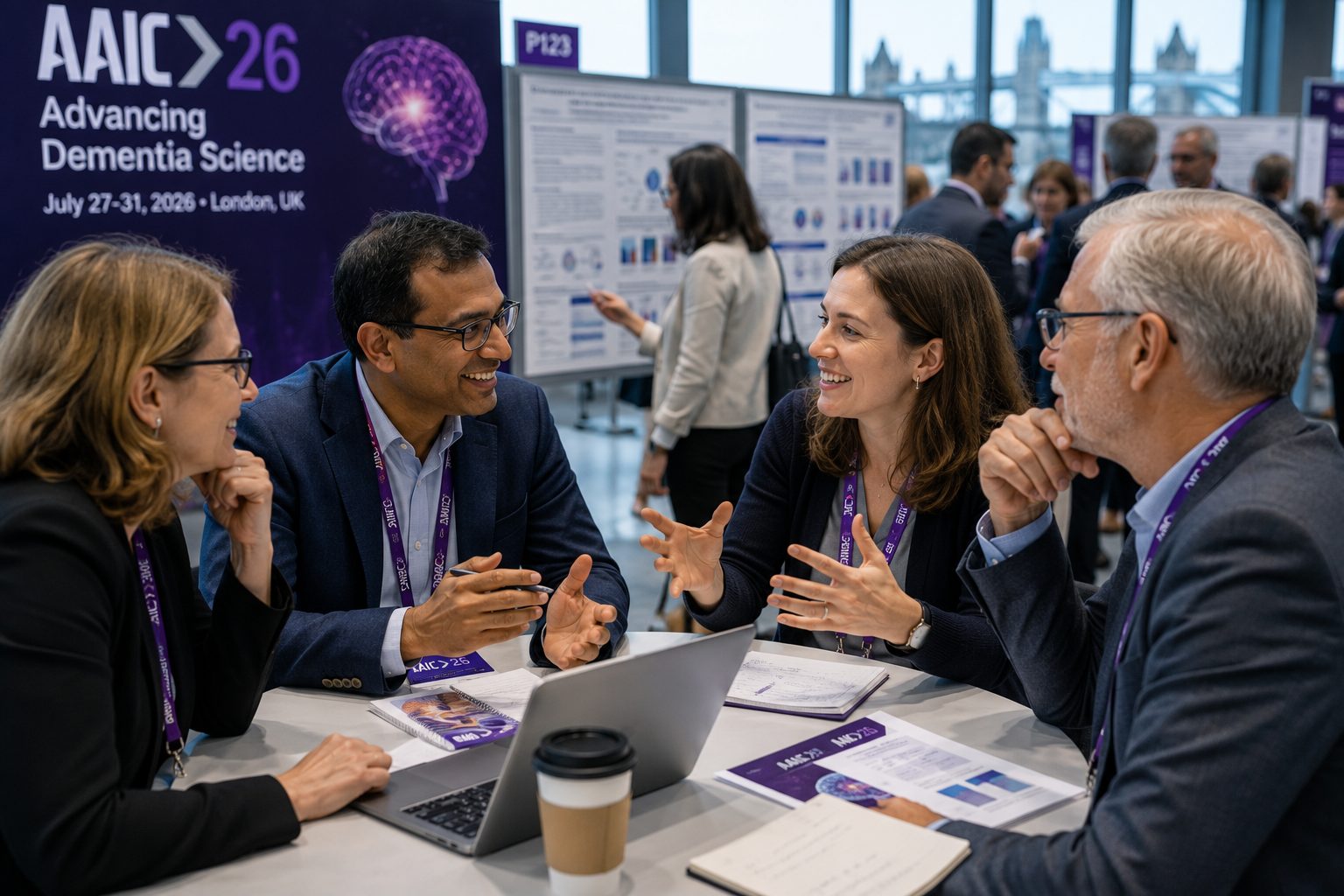
Four intense days in London are over. Thousands of researchers from all over the world have presented new findings on Alzheimer's and other dementia diseases. No single miracle was presented – but several important pieces of the puzzle perhaps fell into place. Here are the most important takeaways.
1) Blood tests are on their way to transforming healthcare
Perhaps the clearest trend is the development of blood tests that can detect Alzheimer's early and help doctors choose the right treatment. This makes diagnosis easier and can reduce the need for cerebrospinal fluid tests and PET scans. See my comment below point 7.
2) The hunt for tau intensifies
Following the successes with amyloid-targeting drugs, increasing attention is now being directed towards the tau protein. Several promising drugs were presented, but most are still in early clinical trials.
3) Combinations are the future
More and more researchers describe Alzheimer's as a disease where several biological processes interact. Therefore, future treatment is expected to consist of combinations – not a single drug.
4) Blood biomarkers are becoming increasingly important
New biomarkers can be used to monitor the disease's progression and see if a treatment is truly effective. This can make future drug studies both faster and safer.
5) Semaglutide was this year's disappointment
The large EVOKE studies showed that semaglutide did not slow cognitive decline in early Alzheimer's. This does not mean the end of metabolism research, but researchers are now seeking other avenues.
6) Amyloid is just the beginning
No one questions the importance of amyloid anymore, but more and more people emphasize that simply removing plaques is not enough. Tau, inflammation, vascular damage, and the brain's energy supply must also be addressed.