
Research
Exercise – Perhaps One of Our Strongest Tools Against Alzheimer's
Article no. 49 · October 5, 2026 · Updated October 8, 2026
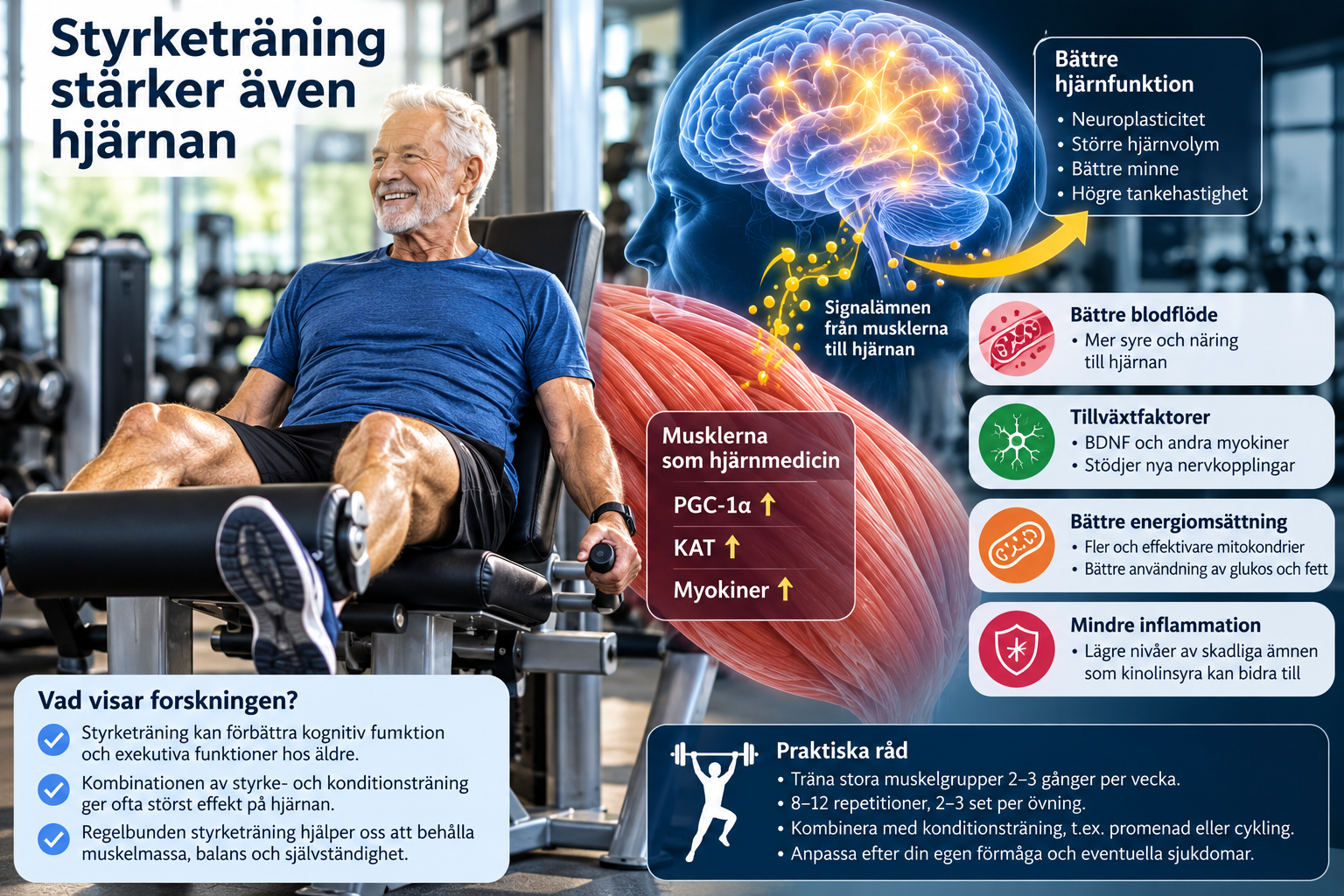
In this piece, I want to explore what research tells us about the physical mechanisms that may help slow the progression of Alzheimer's disease. We've known for a long time that exercise is good for the brain, but the real questions are WHY and HOW. This text builds on what I wrote in article 46, particularly concerning quinolinic acid.
The key takeaways
Exercise can improve things like fitness, muscle strength, balance, and everyday functioning. Research also points to positive effects on cognition, although exercise can't yet be said to slow Alzheimer's disease itself in the same way as disease-modifying drugs. A recent meta-analysis of exercise studies in people with cognitive impairment and dementia provides strong support for the cognitive benefits of physical training.
Source: BMC Sports Science, Medicine and Rehabilitation (2026), “Effects of exercise training on cognitive function in people with cognitive impairment and dementia”. https://link.springer.com/article/10.1186/s11556-026-00412-2
Your muscles can help change which substances reach the brain.
There is a lesser-known and very exciting explanation for why exercising our muscles could be good for the brain, and it involves a substance called kynurenine.
Kynurenine is formed when the body breaks down the amino acid tryptophan. Kynurenine can pass from the blood into the brain, where it can become part of a chain of chemical reactions that, among other things, can form quinolinic acid.
Quinolinic acid is interesting in the context of Alzheimer's because high levels can contribute to inflammation, oxidative stress, and the overstimulation of nerve cells.
This is where our muscles come in.
When we exercise, our muscles' metabolism changes. The workout can increase the activity of enzymes called KATs. These help convert kynurenine into kynurenic acid.