Research
Can Blood Thinners Affect Alzheimer's?
Article no. 45 · September 20, 2026 · Updated October 8, 2026 ·

A few weeks ago, I developed a blood clot in my lower left leg. An ultrasound confirmed a venous thrombosis, and I was put on rivaroxaban, a modern blood-thinning medication. A new Swedish study raises an unexpected question: can certain blood thinners also influence the progression of Alzheimer's disease?
+
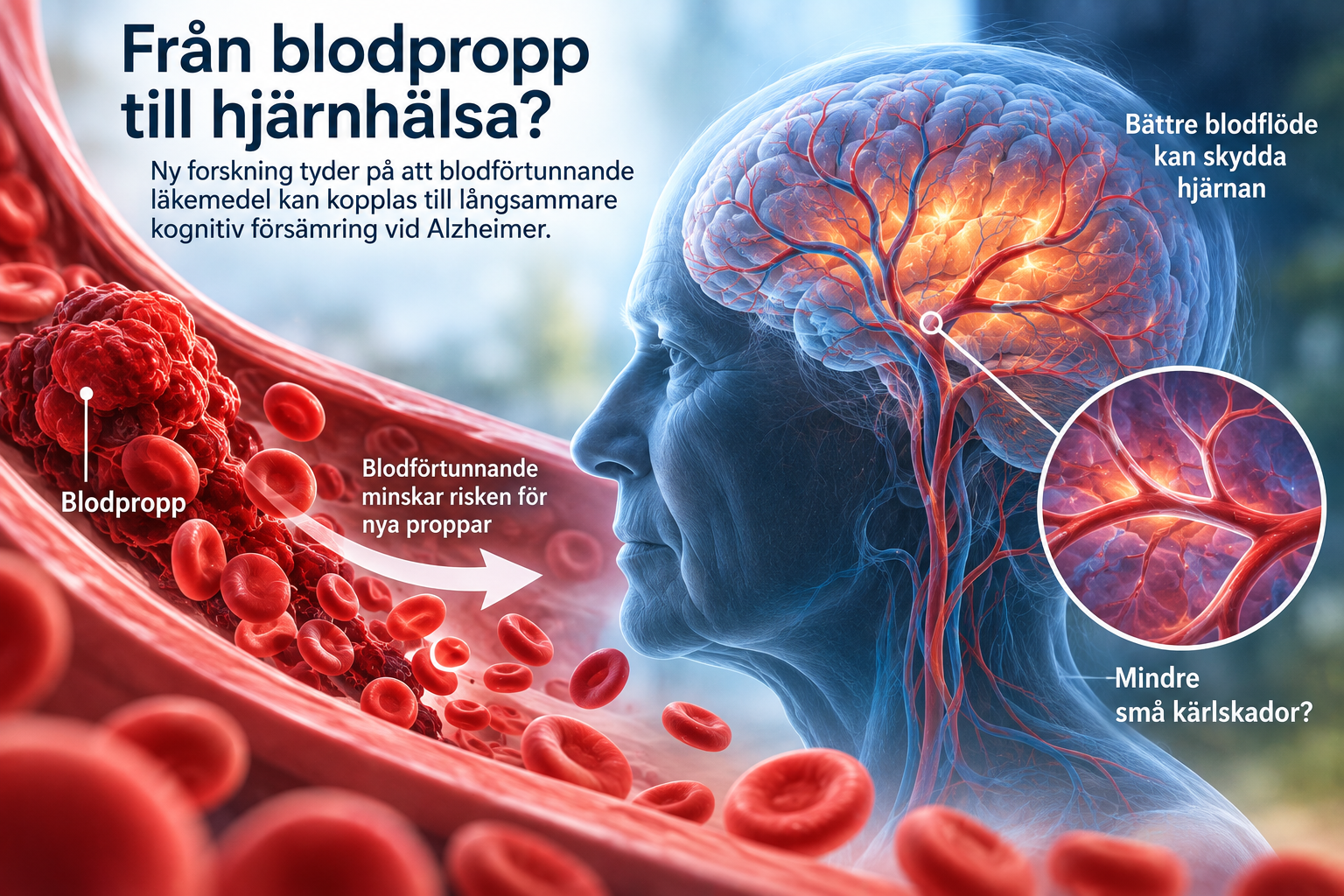
The study comes from the Karolinska Institutet and was published in the European Heart Journal in August 2026. The researchers compared three groups: people receiving modern blood-thinning medications called NOACs, those treated with the older medication warfarin, and people who weren't on any blood-thinning treatment at all.
The results were interesting. Those treated with NOACs experienced a slower decline in their cognitive abilities. The difference corresponded to a little over 0.2 points per year on the MMSE scale compared to the other groups. It’s not a dramatic effect, but over several years, even a small difference could matter.
The researchers suggest a possible explanation that I find especially interesting. Blood-thinning treatment might reduce minor damage to the blood vessels in the brain, and in doing so, help preserve brain function.
And as it happens, I'm taking rivaroxaban myself
Of course, it's tempting for me to draw a personal conclusion here. Rivaroxaban, the drug I'm now taking for my blood clot, belongs to that very group, the NOACs.
But it's not that simple.
The people in the study had atrial fibrillation, which I'm not being treated for. What's more, the study was an observational one. This means the researchers found a correlation, but they haven't proven that the medication itself caused the slower decline.
So there's no evidence to support starting blood thinners to treat Alzheimer's. These medications also carry a risk of bleeding and should only be used when there's a medical reason.