
Research
From Disappointment to a New Hypothesis – Why Lithium is Still Interesting for Alzheimer's
Article no. 31 · June 1, 2026 · Updated September 20, 2026 ·
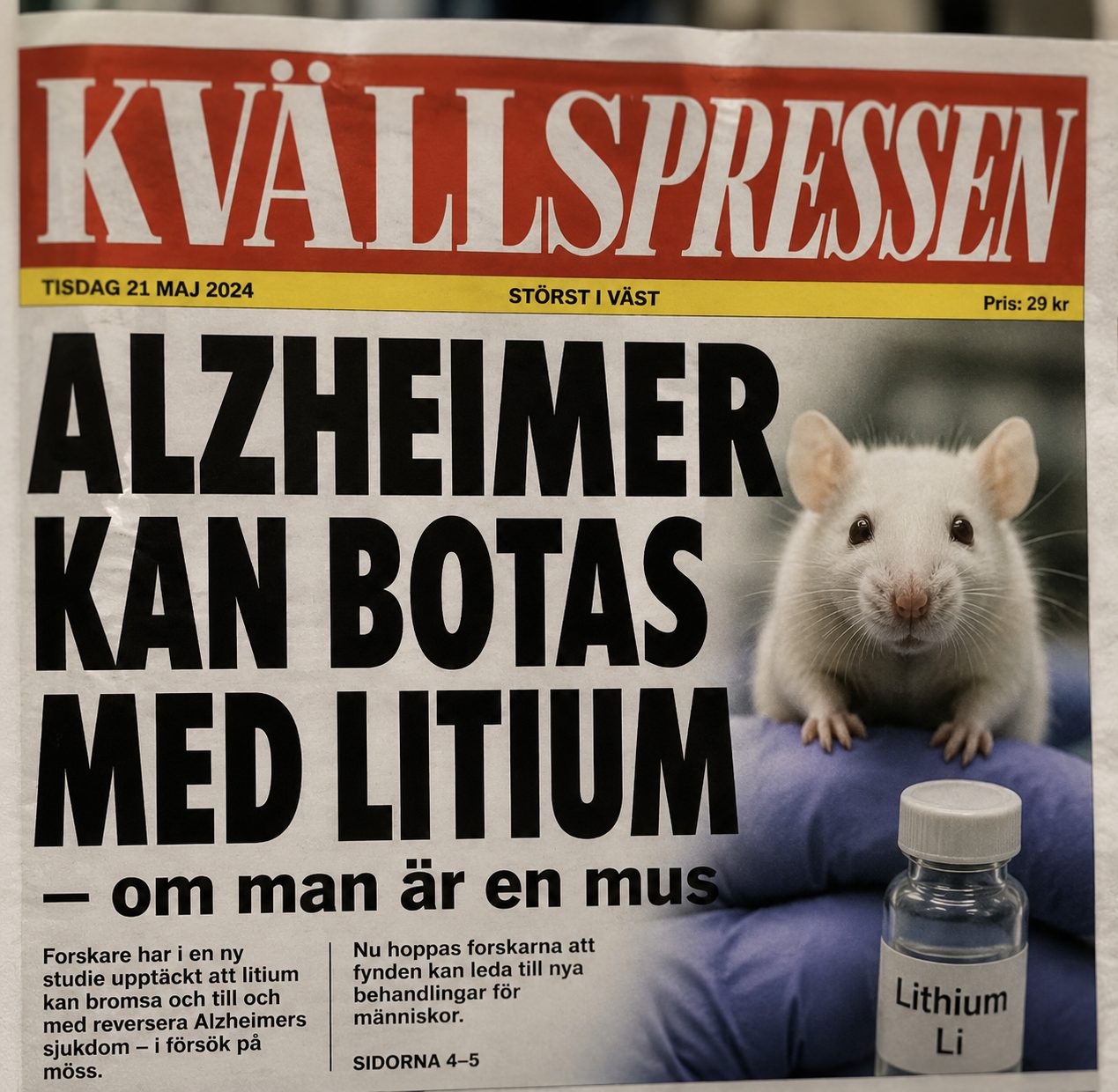
Lithium has been a focus of Alzheimer's research. At the end of last year, Nature published strikingly positive data. But just six months later, a new study offered no hope at all for lithium. However, a new study aims to overcome previous research shortcomings.
Timeline in a nutshell
August 2025
Harvard/Nature: Lithium deficiency is identified as a possible early mechanism behind Alzheimer's, and lithium orotate reverses disease signs in mice.
March 2026
LATTICE is published in JAMMA. Lithium carbonate shows good safety but misses its primary efficacy endpoints. Many perceive this as a significant disappointment.
LiO-AD is registered at Johns Hopkins. Here, for the first time, the Harvard group's hypothesis about lithium orotate is tested in patients with biomarker-confirmed early Alzheimer's.
What makes the situation unusual is that only about seven months passed between the Nature article and the start of the first clinical lithium orotate study. In Alzheimer's research, this is a very rapid progression and indicates that the Nature results generated significant interest despite the negative outcome for LATTICE.
The Nature study that sparked hope for lithium
To start from the beginning. The background to the great interest in lithium right now is the highly publicized article in the journal Nature at the end of 2025 (which I have referred to on this site).
In the study, researchers from Harvard analyzed brain tissue from people with mild cognitive impairment and Alzheimer's. They examined 27 different metals and trace elements. Only one substance showed a consistent deficiency in the brain areas affected by the disease: lithium.

References
- Aron L. et al. Lithium deficiency and the onset of Alzheimer's disease. Nature, 2025.
- Kittur S. et al. Low-Dose Lithium Treatment for Mild Cognitive Impairment. JAMA Neurology, 2026.
- LiO-AD: Lithium Orotate in Alzheimer's Disease – Feasibility, Biomarker Engagement and Clinical Response(NCT07459959), Johns Hopkins University.