
Daily Life
The Five-Finger Model - A Framework for Non-Pharmacological Treatment of Alzheimer's
Article no. 23 · April 25, 2026 · Updated September 20, 2026 ·
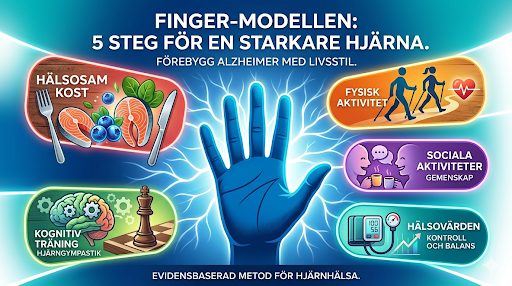
Lifestyle, physical activity, mental stimulation, and social life can affect brain function and help slow the progression of the disease – more effectively than any medication.
The Five-Finger Model – A Framework for Non-Pharmacological Treatment of Alzheimer's
When Alzheimer's is discussed, the debate almost always revolves around medication. In recent years, new antibody treatments have received significant attention, raising hopes that the disease progression could be slowed. At the same time, there is a growing field of research showing that non-pharmacological interventions can play a crucial role in how the disease develops and how long people can function independently.
The Five-Finger Model
The FINGER model is an evidence-based lifestyle model developed by Professor Miia Kivipelto to prevent cognitive decline and reduce the risk of Alzheimer's disease. The model is based on the idea that brain health is influenced by several interacting factors, and by "activating all five fingers," one can strengthen the brain's resilience.
The model comprises the following five areas:
- Healthy diet: A nutrient-rich diet (in line with Nordic nutritional recommendations or the Mediterranean diet) that is good for both the heart and the brain, focusing on vegetables, fruits, berries, whole grains, and fish.
- Physical activity: Regular movement that improves fitness and strengthens muscles, promoting blood circulation to the brain.
- Brain training: Cognitive training and intellectual stimulation, for example, by reading, solving crosswords, learning new things, or participating in discussions.