
Research
Two Parallel Conflicts in Dementia Research
Article no. 20 · April 18, 2026 · Updated September 20, 2026 ·
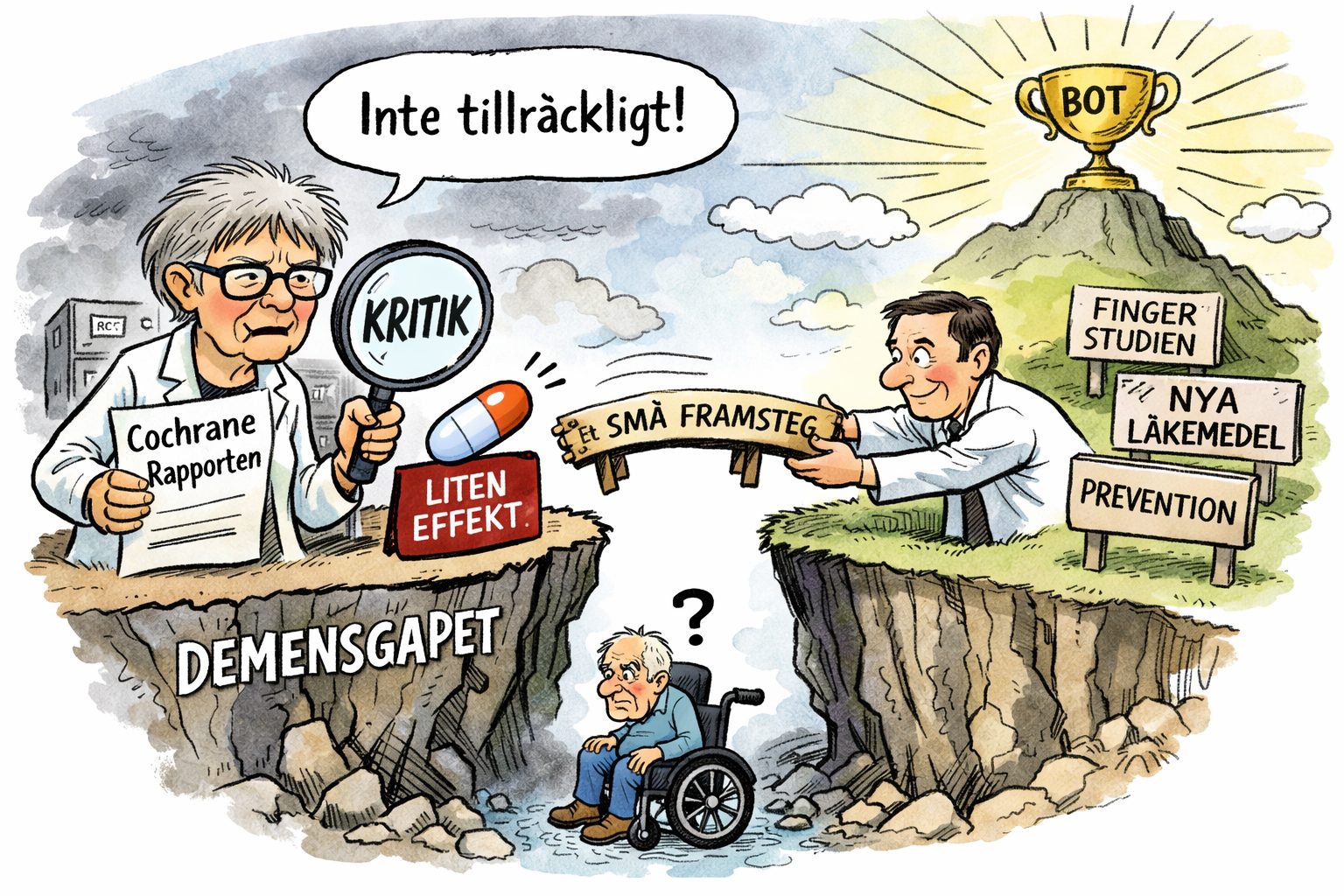
How small an effect can be accepted before something is called "scientific support"?
During the spring, two discussions arose almost simultaneously:
1. Lifestyle Programs (FINGER)
Professor Agnes Wold and several co-authors criticize the government's investment in dementia prevention based on the FINGER Study.
The criticism is that:
- the effect in the study is very small
- improvements may be due to test training
- a reduced risk of dementia has not been shown.
2. New Alzheimer's Drugs
At the same time, a new Cochrane analysis of anti-amyloid drugs like Lecanemab and Donanemab was released. Its conclusion was that the effect on cognition is very small.
However, that report has also received strong criticism from Alzheimer's researchers. See my article “Are the new medicines ineffective?”
The Bigger Question
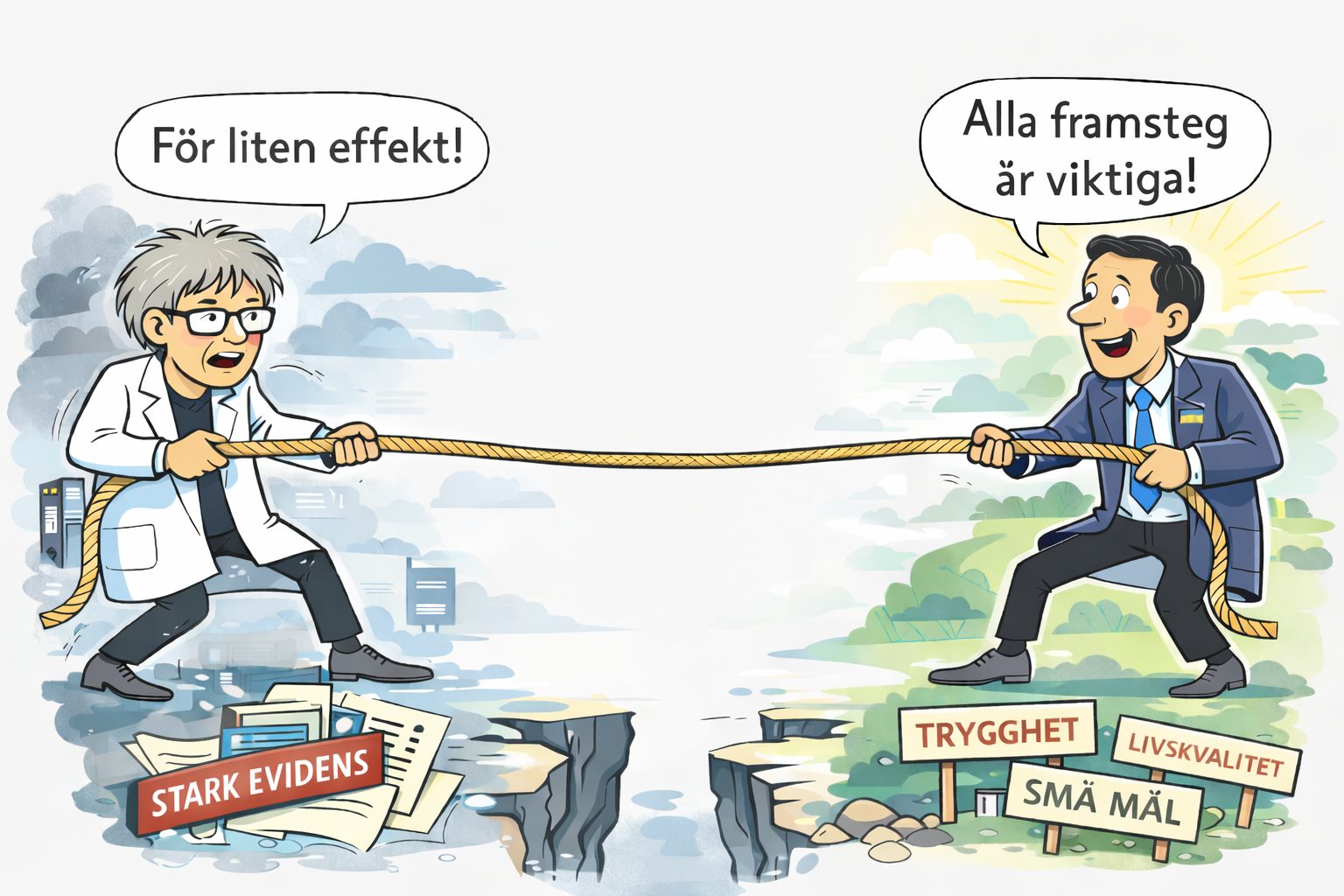
Both debates are essentially about the same thing:
How small an effect can be accepted before something is called “scientific support”?
There are two perspectives:
- Strict evidence, which requires clear effects in clinical studies.
- Pragmatic medical view, which accepts small effects when the disease is severe and alternatives are lacking.
Conclusion
The debate about dementia care is therefore not just about money or treatments. It is about how we should interpret weak but growing medical evidence.
References
- https://www.dn.se/debatt/socialstyrelsen-gar-pa-demensbluffen-vaskar-55-miljoner/
Comments
No comments yet. Be the first!